
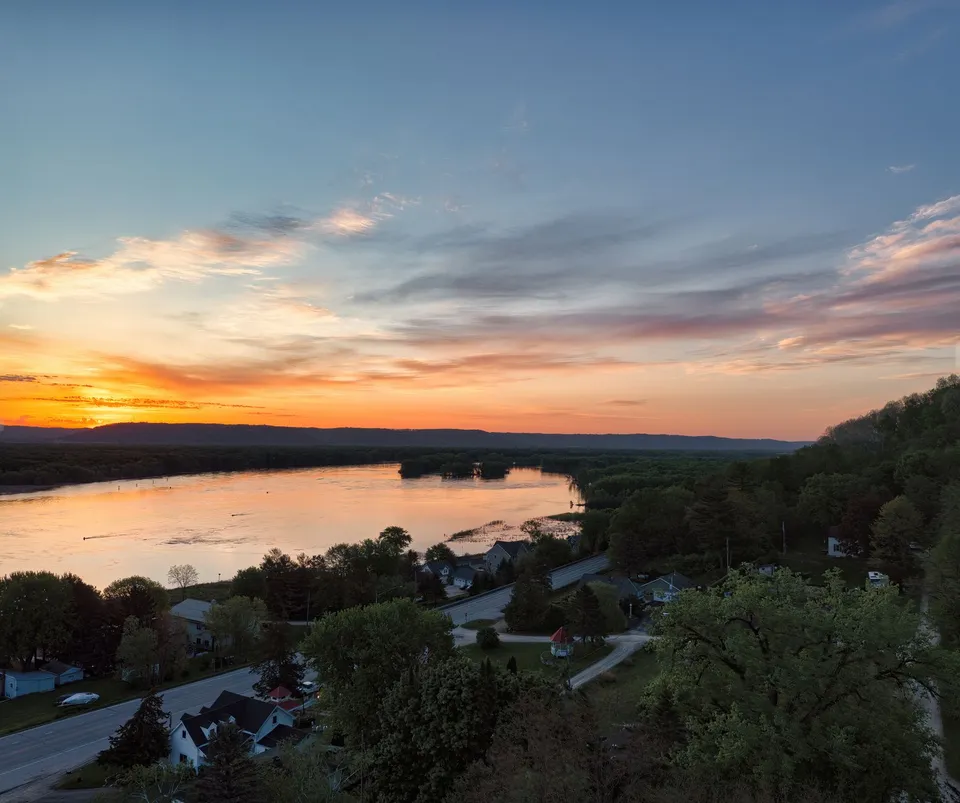
Grand Rapids is a small city by Minnesota standards — 11,181 residents in the city and 45,404 in Itasca County — but the real story is not size. It is the way work, training, and daily life cluster around a few institutions that shape almost every serious job decision here. A worker may land at a 45-bed hospital and clinic, a county road shop, a school district office, or the Itasca campus of Minnesota North College, and each of those places sits on a different schedule and a different part of town. That is why Grand Rapids is less a “one-job” market than a “what comes next?” market.
Three local systems that shape the job search
The most visible employer system is health care. Grand Itasca Clinic & Hospital describes itself as a multi-specialty clinic paired with a 45-bed hospital, a pharmacy, a 24/7 emergency department, and a Rapid Clinic for minor illnesses and injuries. Its service list reaches across family medicine, imaging, mental health, cancer care, surgery, home care, and more. For job seekers, that matters because the hospital is not just a clinical campus; it also implies demand for support work in records, scheduling, food service, maintenance, transportation, and business operations. That is an inference from the service structure, not a claim about any specific opening.
A second system is public works and county government. Itasca County’s transportation department says its maintenance division has about 76 employees across five maintenance districts and a central garage, while construction has about 10 employees. The department also says it is responsible for roughly 1,350 miles of roadway and 140 bridges. That scale explains why work here can include equipment operation, road repair, signing, drainage, bridge projects, snow removal, and ice control rather than only office administration. It also explains why winter conditions are part of the hiring story, not an afterthought.
The third system is education. Grand Rapids Area Schools says it serves about 4,000 students and offers programs from birth through adult learning. The district’s structure includes elementary schools, a middle school, a high school, a learning center, a virtual academy, and districtwide transportation and enrollment support. Its early childhood special education office provides free and confidential help for ages 0 to preschool, including screening, evaluation, home visits, speech and language therapy, and other services. For relocating families, that means school choice is not just a question of reputation; it is a question of service geography, transportation, and the age of the children in the household.
Training is part of the local workforce story
One reason Grand Rapids can support career movement is that the training infrastructure is local enough to use. Minnesota North College’s Itasca campus offers housing, dining, clubs, basic needs support, athletics, tutoring, career exploration, and a fitness center, along with campus hours that run well beyond a normal office day. In other words, it is not just a classroom site; it is part of the daily support system for people trying to move from entry-level work into a credential, or from one job family into another.
That matters in practical terms. A person might begin in customer service, food service, maintenance, or another support role and later use local training to move toward health care, trades, public service, or technical work. The point is not that any transition is automatic. The point is that the town has institutions that can make a transition realistic without forcing a long move first. The campus is a local foothold, not a generic college name on a map.
Transit and housing decide whether a job is actually workable
Grand Rapids also has a transit system that changes how people can live and work. Arrowhead Transit’s Itasca County service says Grand Rapids Dial-A-Ride operates within city limits, is ADA-compliant, and currently runs Monday through Friday from 7 a.m. to 8 p.m., Saturday from 9 a.m. to 5 p.m., and Sunday from 8 a.m. to 2 p.m., with a $3 one-way fare. County routes also connect Grand Rapids with nearby communities such as Cohasset, Deer River, Warba, Bovey, Calumet, Marble, Nashwauk, and Hibbing. That does not mean every shift is easy to reach, but it does mean the city is more connected than a simple rural-town stereotype would suggest.
The commute question is still local, not theoretical. Grand Rapids is a compact city with a downtown core, a highway-corridor medical campus, and surrounding residential areas, while nearby Cohasset, La Prairie, Coleraine, Bovey, and Deer River each have different land-use patterns and access needs. A job in the city center is not the same as a job near a medical campus, an industrial site, or a county facility, and a move to one nearby community does not automatically solve transportation for another.
Housing deserves the same caution. Citywide estimates show median gross rent around $1,090, median owner value around $213,800, and a mean travel time to work of 15.0 minutes, but those numbers describe the city as a whole, not a specific household. They are useful for orientation, not guarantees. A newcomer should still check the exact street, shift, and transit option before assuming a move will feel easy.
What a smart local move looks like
For applicants, the best Grand Rapids job search is not just “What is open?” It is “Which local system fits my next step?” For employers, that means good hiring often depends on more than pay: it depends on whether the role can be reached, trained for, and sustained by the surrounding institutions. For newcomers, it means the move works best when housing, school access, transit, and training are considered together.
If you want to keep the search practical, start with the city’s work-and-life basics, then compare routes, schools, and training options before you accept an offer. You can begin with the jobs page or review the resources page for more local context.