
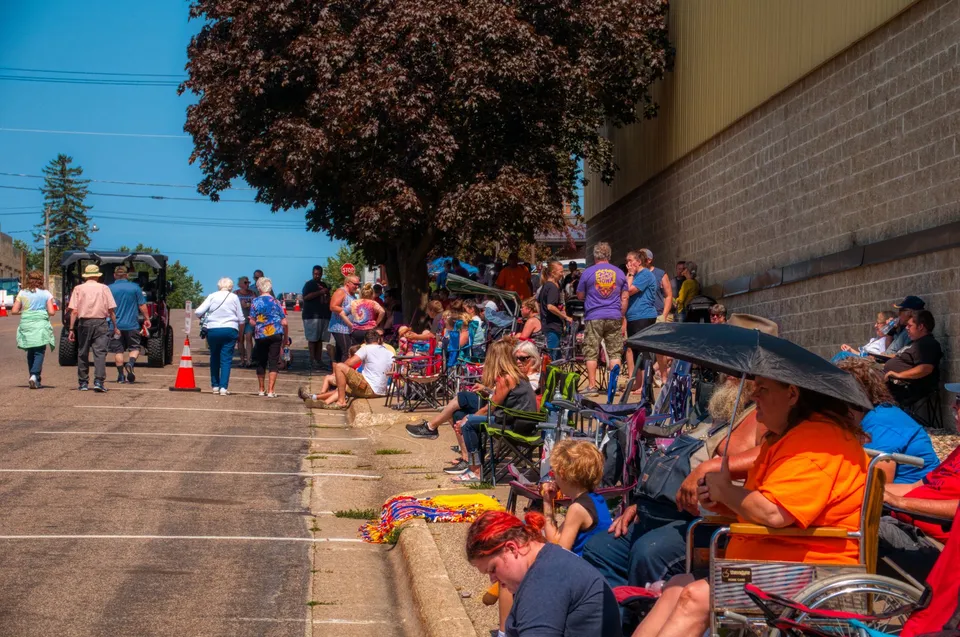
Grand Rapids, Minnesota, not Michigan, is small enough that one employer rarely tells the whole story, but large enough to support a real county-seat economy. The city’s estimated 2025 population is 11,181, Itasca County’s is 45,404, and the county also has 1,175 employer establishments. That means a job here sits inside a network of public, medical, school, utility, and road-related work rather than a single-industry town.
A job market built around institutions
A local job in Grand Rapids often lives inside an institution, not a stand-alone office. Grand Itasca is a 45-bed hospital and clinic with a 24-hour emergency department, a rapid clinic, imaging, surgery, therapy, mental health, women’s health, home care, and pharmacy services. Minnesota North College’s Itasca campus adds a second kind of anchor: housing, dining, tutoring, basic-needs support, and career exploration make it part of the local living infrastructure as well as a training site. ISD 318 serves about 4,000 students and includes early childhood, elementary, middle, high school, virtual, and adult-facing programs.
That mix creates several different entry points for workers and newcomers:
- Health care support can mean patient transport, registration, records, cleaning, maintenance, pharmacy support, or scheduling around a larger clinical system. Grand Itasca’s service mix shows why support roles matter as much as direct care.
- Education can mean classroom support, food service, facilities, transportation, enrollment, or student-facing office work. A district serving about 4,000 students needs more than teachers alone.
- County and city work can mean engineering, survey, GIS, dispatch, probation, veterans services, equipment maintenance, and highway work. The county’s published job descriptions show a wide public-sector skill mix.
- Skilled trades and equipment work can move people into public works, road maintenance, or repair jobs where mechanical skill and reliability matter more than a single narrow title.
For employers, that structure matters too. A county and city region with an older population, a school system that serves children and adults, and a hospital that touches many kinds of households needs hiring practices that recognize transferable skills. The city’s older age profile and the county’s larger older share help explain why health care, public service, and maintenance work stay so central.
What relocation looks like in practice
If you are moving for work, the real question is not whether Grand Rapids is “affordable” in some abstract sense. It is how your household fits the city’s actual housing, transportation, and utility structure. QuickFacts estimates in the report show median gross rent at $1,090, median owner value at $213,800, median monthly owner cost with a mortgage at $1,431, and median owner cost without a mortgage at $550. Those are estimates, not live listings, but they show why renters, first-time buyers, and fixed-budget households should compare options carefully instead of assuming one local number tells the whole story.
Commuting is just as local. The city’s mean travel time to work is 15.0 minutes, but that average does not guarantee an easy trip for every shift or every address. Arrowhead Transit’s Grand Rapids Dial-A-Ride is ADA-compliant, operates within city limits, and has posted one-way fares plus ticket and monthly pass options. That makes transit a real part of the employment picture for workers who do not drive, households that share vehicles, or newcomers who want to delay buying a second car.
Utility setup also shapes the move. Grand Rapids Public Utilities handles electric, water, and wastewater service for the city and surrounding areas, and its strategic plan references service relationships with La Prairie, industrial customers, and Minnesota North College’s Itasca campus. That tells newcomers that some addresses sit inside a city utility system while others outside the line may live with different service realities.
Why the surrounding towns matter
Grand Rapids is the hub, but the local working area is not one interchangeable map. Cohasset, La Prairie, Coleraine, Bovey, and Deer River are part of the same broader Itasca County constellation, yet they do not all offer the same commute pattern, housing type, or daily service access. That is why a move to one address cannot be judged from the city name alone. The city housing market should be read alongside place type: Grand Rapids is compact and service-heavy, while nearby communities have different land-use mixes and access patterns.
County transportation reinforces the point. The county’s road department is responsible for roughly 1,350 miles of roadway and 140 bridges, and the staffing profile in the report points to maintenance, construction, and equipment roles as ongoing work. For employers, that means access and scheduling are part of the labor market. For workers, it means a job offer can look very different depending on whether the worksite sits in town, on a corridor, or out on a rural route.
A place shaped by work, not just scenery
Grand Rapids also carries a strong working-history identity. The Forest History Center includes a recreated logging camp, river exhibits, trails, and space for meetings and training, which helps explain why forestry, public service, and education remain so visible in the area’s daily life. That history is not just a tourism backdrop; it is a clue to how the region grew and why modern jobs here still depend on systems that move material, maintain infrastructure, and serve people across a wide county.
For applicants, employers, and newcomers, the best way to read Grand Rapids is to ask a simple question: what system does this job belong to, and can my household live with that system every day? If the answer looks promising, the next step is simple: review the current jobs page or contact Express about the fit.