
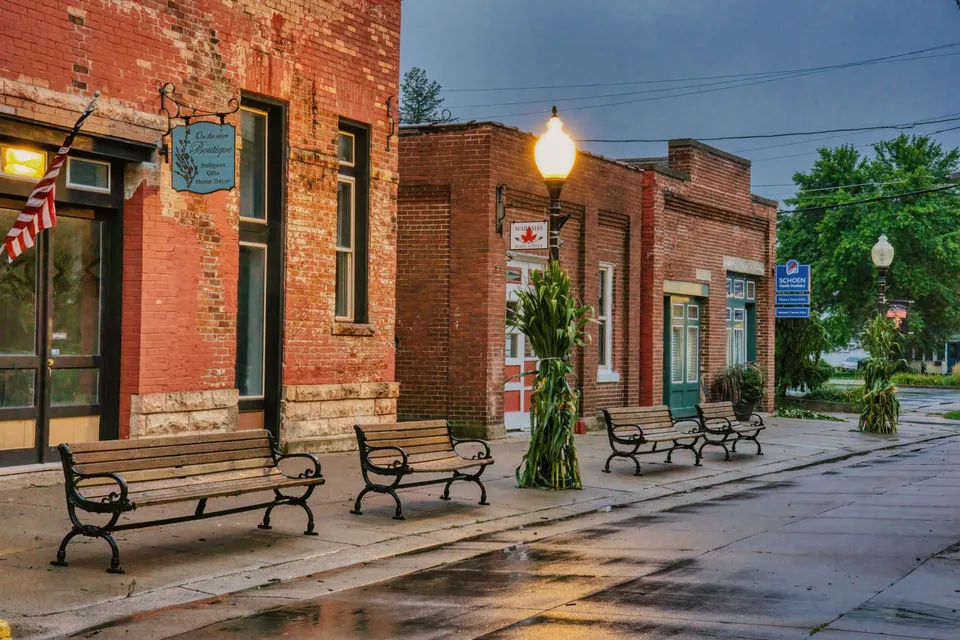
Grand Rapids is not a giant metro where one commute pattern fits everyone, and it is not a one-employer town either. The city’s population is just over 11,000, the county is about 45,000, and the local economy is anchored by institutions that shape daily life as much as job titles do. That matters because a move here is rarely just about the offer letter; it is about whether your work, housing, transportation, and household routines fit the same map.
The first system is getting to work without guessing
Grand Rapids has transit, but it works best when you match it to the shift you actually have. Arrowhead Transit’s Itasca County service includes Grand Rapids Dial-A-Ride, with posted hours on weekdays, Saturdays, and Sundays, plus a fare structure that makes it practical for some residents to use regularly. The catch is the usual one in a smaller city: a route existing on paper does not automatically mean it fits an early start, a late end, or a job outside the city limits.
That is why local commuting decisions are usually more specific than “Can I get around town?” The county highway department is responsible for roughly 1,350 miles of roadway and 140 bridges, and it also handles snow removal and ice control. In other words, transportation here is an everyday system, not a background detail. If you are considering work in Grand Rapids, Cohasset, La Prairie, Deer River, or elsewhere in Itasca County, the real question is not whether roads exist; it is whether your route works in January, after dark, and on the days your schedule changes.
The second system is the utility and housing side of the move
Grand Rapids Public Utilities is one of the clearest examples of how local life is organized around a practical backbone. It handles electric, water, and wastewater service for the city and surrounding areas, which means address-level details matter before you sign a lease or buy a house. A city address, a nearby rural address, and an institutional address near campus or industry may not share the same service setup.
The housing numbers are useful, but only if you read them as context rather than a promise. Recent estimates put the city’s median gross rent at $1,090, median owner value at $213,800, and median monthly owner cost with a mortgage at $1,431. Those are not live listings, and they do not predict what any one household will pay. What they do show is that Grand Rapids has a real housing market with a mix of renters and owners, not a temporary labor camp or a luxury enclave.
For newcomers, that distinction matters. A household deciding between living in Grand Rapids, Cohasset, or a more rural part of the county may face very different tradeoffs in commute length, utility setup, snow clearing, and access to errands. The county is not one uniform housing market, so the smartest move is to treat each address as its own case.
The third system is the institutions that create stable work
Grand Rapids is strongest when you look at the organizations that train, hire, and serve people all at once. Grand Itasca is a major example: the hospital and clinic network includes a 45-bed hospital, a 24/7 emergency department, a pharmacy, a Rapid Clinic, and a broad service mix that reaches beyond one specialty. That kind of operation supports not only clinical roles, but also maintenance, registration, scheduling, billing, facilities, food service, and other support functions.
Education is another anchor. Grand Rapids Area Schools serves about 4,000 students and runs programs from birth through adulthood, while Minnesota North College’s Itasca campus adds housing, dining, basic needs support, tutoring, career exploration, and fitness resources on campus in Grand Rapids. For a newcomer, that means the city is not only a place to work; it is a place where workers, students, and families can build a routine around school calendars, college support, and shared services.
That also helps explain the local labor market. The area has a service-heavy, institutionally anchored economy, with public-sector jobs, health care, transportation, and education all playing visible roles. Grand Rapids is large enough to offer breadth, but small enough that many employers and support systems are still recognizable by name. That combination is good news for people with transferable skills, because it creates entry points in operations, support, maintenance, logistics, and public-facing work.
What this means if you are moving for work
If you are relocating for a Grand Rapids job, think in this order: commute, address, utilities, and then everything else. Ask whether the route works for your shift, whether the home is inside city service boundaries, and whether the rest of your household has the school, transit, and campus support it needs. That sequence is more useful here than a generic “good place to live” checklist.
For a deeper local checklist, start with the resources page.